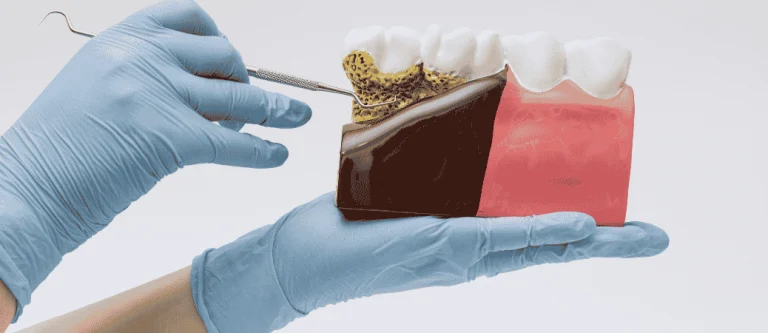
A tooth extraction while taking blood thinners can often be performed safely without interrupting your medication.
Your dentist can use local measures to control bleeding and coordinate with your prescribing doctor when necessary.
Stopping a blood thinner on your own can increase your risk of a stroke, heart attack, or dangerous blood clot.
Keep taking your blood thinner exactly as prescribed, tell your dentist every detail about it, and only change a dose if your dentist and the prescriber who manages it give you one written, coordinated plan.
That approach protects both your mouth and your heart.
If you feel nervous about bleeding, that is a fair worry. Being prepared gives your dental team what it needs to plan a calm, safe visit around your specific medicine and health.
Key Takeaways
- Many extractions go ahead without any change to your blood thinner.
- Your dentist needs the exact drug name, dose, timing, and the reason you take it.
- Light oozing is expected, while heavy bleeding or trouble breathing needs fast help.
What Should You Tell Your Dentist Before Your Appointment?
Your dentist needs the full picture of your medicine and health history, shared before the day of surgery whenever possible.
That includes whether you take anticoagulants (drugs like warfarin that slow clotting factors) or antiplatelet medications (drugs like aspirin that keep platelets from sticking), plus any history of a blood clot, a stent, or heavy bleeding.
Bring Medication Names, Doses, Timing, and Prescriber Details
“I take a blood thinner” is a starting point, but it leaves too many gaps. Bring the bottle, a pharmacy printout, or your patient portal list. Pill color or “it’s for my heart” won’t tell the team enough.
For each medicine, write down:
- The brand or generic name and strength
- How often you take it and the time of your usual dose
- When you took your last dose before the appointment
- Why you take it (atrial fibrillation, a past clot, a valve, a stent)
- The name and phone number of the doctor who manages it
Include aspirin even if you buy it over the counter. Also mention any dose you missed, took late, or recently changed.
Mention Recent Stents, Blood Clots, and Previous Bleeding
The reason you take a blood thinner shapes your plan as much as the drug does. A recent coronary stent, a new blood clot in a leg or lung, a recent stroke, or a mechanical heart valve all raise the stakes of any pause in treatment.
Tell your dentist if you have ever bled for a long time after a past extraction, a cut, or another surgery. Easy bruising, frequent nosebleeds, and gums that bleed heavily when you brush are worth sharing too.
Include Supplements, Other Medicines, and Kidney or Liver Conditions
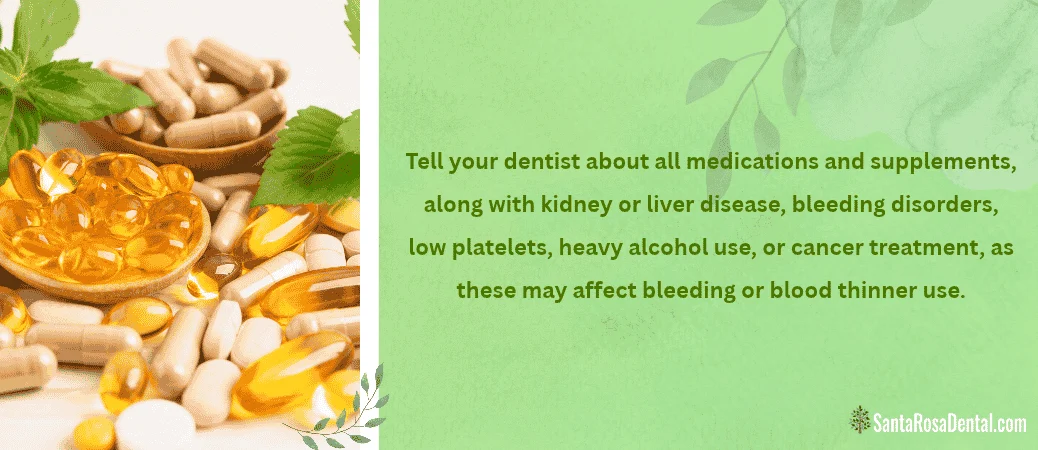
Some supplements and herbal products may affect bleeding or interact with blood thinners.
Tell your dentist about everything you take, including fish oil, ginkgo, ginseng, dong quai, garlic supplements, and ginger supplements.
List vitamins and herbal products alongside your prescriptions so your care team can assess potential interactions.
Kidney and liver health matter because those organs clear many blood thinners from your body.
Let your dentist know about kidney disease, liver disease, low platelets, a bleeding disorder, heavy alcohol use, or cancer treatment.
Why Shouldn’t You Stop Your Medication Yourself?
Stopping a blood thinner without a plan removes the protection your doctor prescribed it for, and for most people that trade is not worth it.
The bleeding from an extraction is usually local and manageable, while a clot elsewhere in the body can change your life.
Why Preventing Stroke and Heart Attack Matters
Blood thinners are prescribed to prevent serious events such as stroke, heart attack, pulmonary embolism (a clot in the lung), and deep-vein thrombosis. Pausing them, even for a few days, can open a window for a clot to form.
The American Dental Association states that for most patients, anticoagulant and antiplatelet medicines do not need to be altered before dental procedures, with bleeding handled by local measures.
That is a general finding, so your own plan still comes from your care team.
Skipping a dose here and there “just to be safe” also creates an unpredictable pattern. It can raise your clot risk without reliably lowering bleeding.
Why Coronary Stents and Dual Antiplatelet Therapy Need Special Care
If you have a coronary stent, you likely take antiplatelet therapy, and many people take two drugs together. This is called dual antiplatelet therapy, often aspirin plus clopidogrel, prasugrel, or ticagrelor.
These drugs keep a clot from forming inside the stent. A clot there, called stent thrombosis, can cause a heart attack.
Stopping dual antiplatelet therapy after a recent stent carries serious risk and should be discussed with your cardiologist first.
Who Decides Whether Your Medication Plan Should Change?
Your dentist and the clinician who manages your blood thinner decide together. Your dentist judges how much bleeding the procedure involves.
Your prescriber judges how risky a pause would be for your heart or clotting condition.
If a change is needed, ask for it in writing. Confirm which doses change, when the change starts, and when you go back to your normal schedule.
If the two offices give you different instructions, call both and let them sort it out before extraction day.
At Santa Rosa Dental, let your dental team know who manages your blood thinner so the appropriate medical information can be coordinated before treatment when needed.
How Does Your Specific Blood Thinner Affect Extraction Planning?
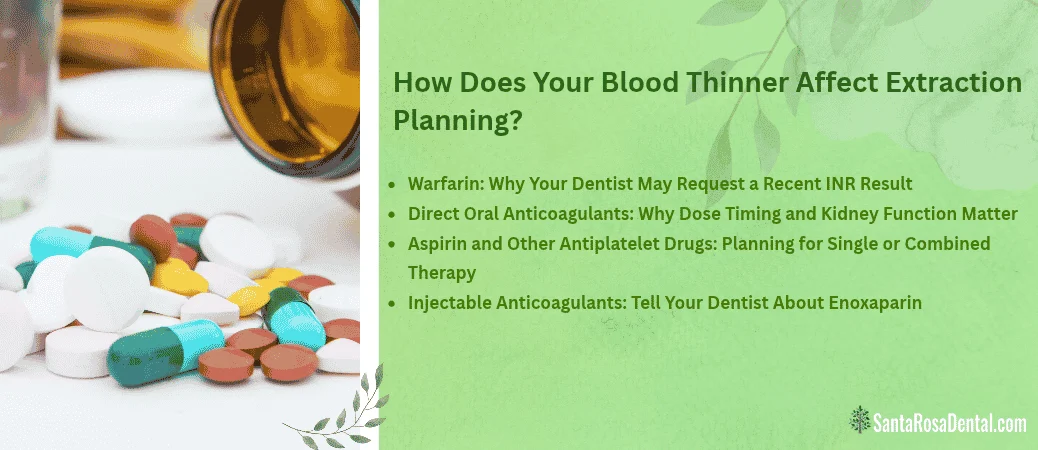
Each type of blood thinner works differently, which changes what your dentist checks before treatment.
Warfarin calls for a recent blood test, the newer pills raise questions about timing and kidney health, antiplatelet drugs depend on why and how many you take, and injections need their own discussion.
Warfarin: Why Your Dentist May Request a Recent INR Result
Warfarin (Coumadin) is measured with a blood test called the INR, which shows how long your blood takes to clot. A common target range for many patients is an INR of 2.0 to 3.0, though your doctor sets your personal goal.
Your dentist will want a recent INR, ideally close to the appointment date, from your anticoagulation clinic.
Guidelines differ on the exact numbers that call for a delay, so your dentist and prescriber look at your result together. Please don’t adjust your warfarin dose to “lower” your INR before a visit.
Warfarin also interacts with some antibiotics and pain relievers, which is another reason your dentist needs to know you take it.
Direct Oral Anticoagulants: Why Dose Timing and Kidney Function Matter
Direct oral anticoagulants, or DOACs, include apixaban (Eliquis), rivaroxaban (Xarelto), dabigatran (Pradaxa), and edoxaban. They don’t need routine INR checks, and their effect rises and falls through the day.
Apixaban, for example, has an approximate half-life of 12 hours. Depending on the complexity of your extraction, your dentist may consider the timing of your usual dose when planning treatment.
Many routine dental procedures can be performed without changing your medication schedule, while procedures with a higher bleeding risk may require additional coordination with your prescribing doctor.
Your kidneys clear these drugs, dabigatran especially. Weaker kidney function means the drug stays in your body longer, so your kidney test results help shape the plan.
Aspirin and Other Antiplatelet Drugs: Planning for Single or Combined Therapy
Antiplatelet medicines include aspirin, clopidogrel (Plavix), prasugrel, ticagrelor, and the older drug ticlopidine.
Aspirin and clopidogrel affect platelets for their whole lifespan of about 7 to 10 days, so skipping a single dose changes little.
Low-dose aspirin alone usually causes only a modest increase in bleeding. Two antiplatelet drugs together raise bleeding more, and they usually signal a heart condition where stopping is risky.
With dual therapy, expect your dentist to plan extra local bleeding control and to talk with your cardiologist.
Injectable Anticoagulants: Tell Your Dentist About Enoxaparin
Enoxaparin (Lovenox) is a shot, often used for a short time after hospital stays or as “bridging” while another blood thinner is paused. Because it’s an injection, people sometimes forget to list it.
Tell your dentist if you use enoxaparin or any heparin shot, including when your last injection was. Planning around injections is often done with your doctor or a hospital team, especially if you have other health concerns.
How Can Your Dentist Control Bleeding During an Extraction?
Careful technique and local measures in the socket control most bleeding, even when you stay on your blood thinner. Your bleeding risk also depends on how many teeth come out and how much the gum and bone are disturbed.
Simple vs. Surgical Extractions: Assessing Your Bleeding Risk
A simple extraction typically involves removing an accessible tooth using dental instruments without making an incision in the gum.
A surgical extraction may require an incision, removal of surrounding bone, or sectioning the tooth, which can increase the complexity of the procedure and the risk of bleeding.
Your dentist weighs these factors before deciding on a plan:
- Number of teeth being removed in one visit
- Whether the tooth is impacted or broken below the gum
- Active infection or inflamed tissue around the tooth
- Your blood thinner type and medical history
If you’re still deciding whether a tooth needs to come out, describe your signs and talk with your dentist. If tooth replacement is part of your long-term plan, ask whether bone grafting at the time of extraction could help preserve your jawbone.
Your dentist will consider any additional surgical steps when assessing your bleeding risk.
Local Measures: Pressure, Socket Packing, Stitches, and Antifibrinolytics
These are the tools dentists use right at the site:
| Measure | What it does |
| Firm gauze pressure | Helps a stable clot form in the socket |
| Socket packing | A dissolving material such as oxidized cellulose or a collagen plug supports the clot |
| Stitches | Bring the gum edges together and hold pressure on the clot |
| Tranexamic acid | A rinse or soaked gauze that helps keep the clot from breaking down |
According to the American Academy of Oral Medicine, bleeding after dental surgery in patients taking warfarin can usually be managed with local measures such as gauze pressure, stitches, and additional bleeding-control materials.
Your dentist selects the appropriate measures for your extraction and checks that bleeding is controlled before you leave.
When Staged Treatment or Specialist Care May Help
If you need several teeth out, your dentist might spread the work over more than one visit. Smaller wounds are easier to control.
For complex cases, such as dual antiplatelet therapy with a recent stent, a bleeding disorder, or poor kidney function, your dentist might refer you for oral surgery or hospital-based care.
That referral adds support and does not mean something went wrong. If anxiety about the procedure is another concern, ask whether sedation dentistry may help you feel more comfortable during treatment.
Your dentist will review your medications and medical history before recommending an appropriate sedation option.
What Should You Do During Recovery?
The first 24 hours shape your healing, so follow your written instructions closely and protect the clot. Some light oozing is normal on a blood thinner, and knowing what is expected helps you stay calm.
Follow Your Written Instructions and Protect the Extraction Clot
The clot in the socket is your body’s natural bandage. These habits help it stay put:
- Bite firmly on gauze for the full time your dentist gives you, without peeking
- Skip rinsing, spitting, and straws for the first 24 hours unless told otherwise
- Avoid hot drinks, hard foods, and smoking at first
- Keep your head raised when resting
- Use any tranexamic acid rinse exactly as directed
Dry socket happens when the clot is lost early, which leaves bone exposed and painful. It’s linked to things like smoking and disturbing the site; blood thinners themselves are not a known cause.
Our tooth extractions team gives every patient written aftercare to take home.
Check Which Pain Relievers Are Safe With Your Medicines
Ask your dentist or pharmacist before taking any pain reliever. Ibuprofen, naproxen, and additional aspirin may increase bleeding risk when taken with blood thinners.
If aspirin is already part of your prescribed treatment, continue taking it unless your care team instructs you otherwise.
Acetaminophen may be an appropriate option for many patients, but confirm the dose and duration with your dentist or pharmacist.
This is especially important if you take warfarin or have liver disease, since regular acetaminophen use can also affect warfarin treatment. Do not use leftover prescriptions or someone else’s medication.
Know When Bleeding Needs an Urgent Call or Emergency Care
| What you notice | What to do |
| Pink-tinged saliva or light oozing in the first day | Expected; keep gentle gauze pressure |
| Bleeding that soaks gauze despite 20 minutes of firm pressure, or restarts after stopping | Call your dental office, including after hours |
| Fast swelling, fever, or worsening pain | Call your dental office promptly |
| Heavy bleeding you can’t control, trouble breathing or swallowing, fainting, chest pain, or stroke signs | Call 911 |
If bleeding continues, maintain firm pressure with clean gauze and contact your dental office for instructions. Do not delay seeking medical attention if bleeding is heavy or cannot be controlled.
Make a Coordinated Plan Before Extraction Day

A safe extraction while taking blood thinners starts with good information and teamwork. You bring your medication details, your dentist plans the bleeding control, and your prescriber provides guidance when needed.
If you are considering dental implants to replace the extracted tooth, discuss your long-term treatment plan before extraction day.
This gives your dentist an opportunity to assess bone preservation needs, healing considerations, and your suitability for future implant treatment.
Use this checklist in the week before:
- Write out every medicine and supplement, with doses and times.
- Note why you take your blood thinner and any recent stent, clot, or stroke.
- Give your dentist your prescriber’s name and number.
- For warfarin, arrange a recent INR test with your clinic.
- Get any medication change in writing from both offices.
- Ask which pain reliever to use and save the after-hours number.
Keep up with general preventive dentistry visits so future problems are caught early and planned calmly. If you have questions about your own plan, the team at Santa Rosa Dental is glad to talk them through before your visit.
Frequently Asked Questions
Do I need to stop blood thinners before a tooth extraction?
Most people do not need to stop. Many extractions are done safely while you keep taking your medicine, with bleeding controlled in the mouth. Any change should come only from your dentist and prescriber together.
How long should I stop clopidogrel before having a tooth removed?
Clopidogrel is usually continued for extractions. It is often prescribed after a stent, where stopping can be dangerous. Only your cardiologist and dentist should decide on any pause.
Should I skip Xarelto or Eliquis on the morning of my extraction?
Don’t skip a dose unless your care team tells you to in writing. Some dentists time surgery around your dose schedule, while others proceed as usual. Ask both offices well before the appointment.
Does everyone taking blood thinners need an INR test?
No, the INR test is mainly for warfarin. DOACs and antiplatelet drugs don’t need routine INR checks. Your dentist might still ask about kidney tests if you take a DOAC.
Can I have my teeth cleaned while taking blood thinners?
Yes, cleanings are routine for people on blood thinners. Your gums might bleed a little more, and that is usually easy to manage. Keep your medication list updated so the hygienist knows what you take.